Why Lead Management Matters in Construction
Every contractor knows the thrill of getting a new inquiry. Whether it comes from a website, Google Business Profile, social media, referrals, or paid ads, each lead represents potential income. Unfortunately, many construction businesses miss opportunities because inquiries are not tracked properly, follow-ups are slow, or customer information is scattered across emails, spreadsheets, and handwritten notes. Research shows that how quickly you respond greatly affects conversion rates. This makes organized Lead Management for Contractors more important than ever.
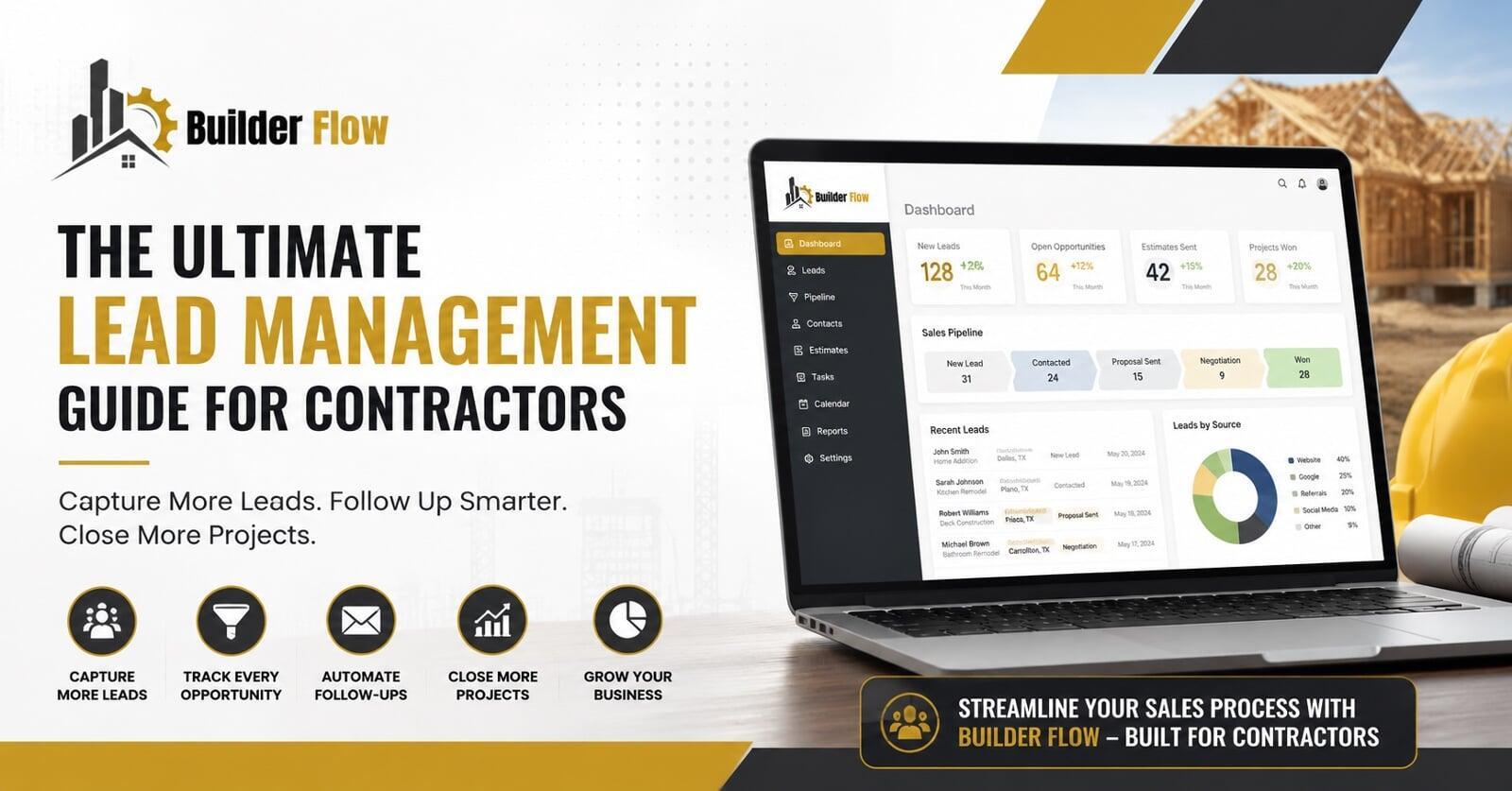
Construction projects usually involve longer sales cycles than many other industries. Homeowners and commercial clients compare estimates, request changes, and often communicate for weeks before making a final decision. Without an organized system, contractors can easily forget callbacks, lose proposal versions, or miss important appointments. A structured Construction Lead Management process ensures every prospect gets timely communication from the first inquiry until the contract is signed.
Modern contractors are also investing more in technology. Industry surveys show that more businesses are adopting CRM software to gain better insight into sales pipelines and customer relationships. Cloud-based CRM platforms have helped improve workflow coordination and operational efficiency across construction companies.
What Is Contractor Lead Management?
Contractor Lead Management is the process of capturing, organizing, nurturing, tracking, and converting potential customers into paying clients. Instead of depending on memory or separate tools, contractors use a central system to keep track of every interaction during the customer journey.
The typical lead journey includes:
Stage | Description |
Lead Capture | Collect inquiries from forms, phone calls, referrals, and advertisements |
Qualification | Determine project scope, budget, and timeline |
Estimate | Prepare and send accurate quotes |
Follow-Up | Maintain communication through reminders and updates |
Closing | Convert the lead into an active customer |
Project Handoff | Transfer information seamlessly to project management |
Common Sources of Construction Leads
Today's contractors receive inquiries from multiple channels, including:
- Organic Google searches
- Google Business Profile
- Website contact forms
- Facebook and Instagram advertising
- Referrals
- Email campaigns
- Phone calls
- Local directories
- Repeat customers
The challenge isn't generating leads—it's ensuring every lead receives consistent follow-up. Studies suggest many contractors lose business simply because responses are delayed or inconsistent, despite investing significantly in marketing.
Essential Components of an Effective Lead Management System
An effective lead management strategy for contractors involves more than just gathering names and phone numbers. It needs a complete system that captures inquiries, organizes customer information, prioritizes opportunities, and makes sure every prospect gets consistent communication. Contractors often handle many active estimates while managing several projects, making it easy for potential customers to be overlooked. A structured lead management process reduces uncertainty by providing every team member access to accurate, current information.
Lead Capture
The first step is to capture every inquiry, no matter where it comes from. Contractors get leads from website forms, Google Business Profile listings, Facebook ads, referrals, local directories, phone calls, email campaigns, and even walk-ins. Instead of entering each lead manually into spreadsheets, modern CRM software automatically gathers customer information into one centralized dashboard. This saves time, reduces data entry mistakes, and makes sure every inquiry is documented from the start.
Automated lead capture also helps contractors see which marketing channels bring in the best leads. Instead of guessing whether SEO, paid ads, or referrals are performing well, contractors can look at the results and confidently invest more in the channels that consistently bring in profitable projects.
Lead Qualification
Not every inquiry is from an ideal customer. Some prospects may have unrealistic budgets, projects that are outside the company's service area, or timelines that don’t fit with current availability. Effective Construction Lead Management involves qualifying leads before spending a lot of time preparing estimates.
Qualification typically involves asking questions such as:
- What type of project are you planning?
- What is your estimated budget?
- When do you want to begin?
- Where is the property located?
- Have you worked with a contractor before?
Collecting this information early allows contractors to prioritize high-value opportunities while politely declining projects that aren't a good fit. This improves sales efficiency and increases close rates over time.
Lead Tracking
Once qualified, every lead should move through a clear sales pipeline. This is where Lead Tracking for Contractors becomes essential. Each prospect can be given a status like New Inquiry, Contacted, Site Visit Scheduled, Estimate Sent, Negotiation, Won, or Lost. Team members can quickly see where every customer stands without searching through emails or text messages.
Visual pipelines also make forecasting simpler. Business owners get a real-time overview of future revenue by identifying how many estimates are waiting for approval, which projects are likely to close soon, and where follow-up efforts should focus. Instead of reacting to missed opportunities, contractors can proactively manage every stage of the sales process.
Automated Follow-Ups
Many construction projects succeed not just because a contractor submitted the lowest bid, but because they stayed engaged with the customer throughout the decision-making process. Automated reminders ensure prospects receive timely follow-up emails, phone calls, or texts after estimates have been sent. This steady communication shows professionalism and keeps your company at the forefront of their minds.
Automation also cuts down on administrative work for office staff. Instead of tracking dozens of follow-up dates manually on calendars or sticky notes, CRM software schedules reminders automatically. As a result, contractors spend less time managing paperwork and more time building relationships with potential clients.
How CRM Software Improves Construction Lead Management
Construction businesses often outgrow spreadsheets quickly. What works for managing ten leads each month can become challenging when your business handles fifty or even hundreds of inquiries. That's why many growing contractors turn to dedicated CRM software designed specifically for the construction industry.
A contractor CRM acts as a central hub for every customer interaction. It stores contact information, communication history, estimates, appointments, project notes, contracts, invoices, and follow-up reminders in one secure location. Team members no longer waste time searching through emails or asking colleagues for updates because every interaction is recorded automatically.
One of the biggest advantages is improved collaboration. Sales representatives, office administrators, project managers, and company owners all have access to the same customer information. This ensures a smoother transition from lead generation to project execution, while reducing communication gaps that can frustrate clients.
Reporting features also provide valuable business insights. Contractors can see which marketing campaigns generate the best return on investment, monitor average sales cycles, evaluate employee performance, and predict future revenue more accurately. These insights enable business owners to make better decisions based on measurable data rather than assumptions.
For companies looking for reliable Dallas Contractor CRM Software, selecting a solution built specifically for construction workflows can significantly boost productivity, customer satisfaction, and long-term business growth.
Best Practices for Lead Tracking for Contractors
Generating leads is just the first step in building a successful construction business. The real challenge is managing every opportunity until it turns into a signed contract. Effective lead tracking for contractors involves organization, speed, and communication to make sure that no potential customer is overlooked. By using proven best practices, contractors can boost conversion rates, enhance customer satisfaction, and establish a more reliable sales pipeline.
Respond Quickly to Every Inquiry
In today's digital world, customers expect quick responses. When someone asks for an estimate, they often reach out to several contractors at once. The business that replies first gains a strong advantage. This shows professionalism, reliability, and a real interest in securing the project.
Setting up automated notifications makes sure that new inquiries go straight to the right salesperson or office administrator. Even if a complete estimate can't be given right away, acknowledging the customer's request and planning the next step helps build trust. A simple confirmation message and a timely phone call can determine whether a valuable project is won or lost.
Prioritize High-Value Opportunities
Not every lead deserves the same level of attention. Successful contractors create criteria to identify projects with the best chance of closing and being profitable. Factors like project size, location, estimated budget, service type, and timeline all affect lead quality.
Many CRM systems have lead scoring features that rank prospects based on set rules. This helps sales teams focus on opportunities that are likely to bring in revenue while still keeping in touch with lower-priority prospects. As a result, resources are used more efficiently, and sales productivity improves.
Maintain Consistent Communication
Homeowners and commercial clients value transparency during the buying process. Regular updates assure prospects that their project is important and that the contractor is dedicated to providing good service. Whether through email, phone calls, or text messages, keeping consistent communication helps prevent prospects from feeling neglected.
A structured follow-up schedule also helps contractors stay organized. For instance, sending a reminder a few days after offering an estimate, checking in after one week, and inviting questions shows professionalism without being too pushy. This balanced approach keeps conversations going while respecting the customer's decision-making process.
Track Performance Metrics
One of the main benefits of digital Construction Lead Management is the ability to measure performance. Instead of relying on guesses, contractors can track key metrics such as:
KPI | Why It Matters |
Number of New Leads | Measures marketing effectiveness |
Response Time | Indicates customer service efficiency |
Estimate-to-Contract Ratio | Tracks sales performance |
Lead Source Performance | Identifies highest ROI marketing channels |
Average Sales Cycle | Helps forecast revenue |
Customer Conversion Rate | Measures overall sales success |
Monitoring these indicators regularly allows contractors to identify bottlenecks, improve workflows, and make data-driven decisions that contribute to long-term growth.
Choosing the Right Dallas Contractor CRM Software
Selecting the right CRM platform is one of the most important technology investments a construction company can make. While many generic CRM solutions exist, they often lack features designed for the unique workflows of contractors. Construction businesses need tools that can manage estimates, site visits, customer communication, project scheduling, and document storage all in one place.
When looking at Dallas Contractor CRM Software, focus on features that make daily operations easier instead of adding unnecessary complexity. A user-friendly interface helps employees learn quickly. Cloud-based access lets teams update customer information from the office, job site, or while traveling between appointments.
Other important factors include automation features, customizable sales pipelines, reporting dashboards, mobile compatibility, and integration with estimating or accounting software. As your business grows, your CRM should grow with it without needing major workflow changes or costly system replacements.
Security is also crucial. Customer records, contracts, and financial information should be protected with secure cloud infrastructure, user permissions, and regular backups. Choosing a trustworthy CRM provider keeps your business data safe and accessible whenever your team needs it.
Why Builderflow App Is Built for Contractors
Managing construction leads shouldn't mean juggling spreadsheets, sticky notes, email chains, and different software. Builderflow App brings every part of the customer journey together in one central platform designed for contractors. It helps from capturing new inquiries to tracking estimates and managing follow-ups. This platform keeps businesses organized and improves the customer experience.
Instead of guessing which salesperson contacted a prospect or if an estimate has been sent, contractors can see every opportunity clearly. Team members can work together easily, access customer records from anywhere, and make sure every lead moves efficiently through the sales pipeline. Automated reminders and customizable workflows cut down on admin tasks, letting contractors focus on what they do best, which is building great projects.
For construction businesses looking for reliable Lead Management for Contractors, Contractor Lead Management, and Lead Tracking for Contractors, Builderflow App offers the tools needed to streamline operations, improve conversion rates, and speed up business growth. Whether you run a small remodeling business or a large commercial contractor, investing in specialized CRM software can change how you handle customer relationships and win more projects.
Conclusion
The construction industry is becoming more competitive, and winning projects requires more than just skilled craftsmanship. Contractors need a reliable process for capturing inquiries, organizing customer information, following up consistently, and monitoring every opportunity from the first conversation to the signed contract. Without an effective lead management strategy, even the best businesses risk losing valuable projects because leads can be overlooked or communication may break down. Implementing a structured construction lead management system helps contractors stay organized, improve customer relationships, and create a predictable sales pipeline that supports long-term growth.
Technology has changed how construction businesses manage sales, making dedicated CRM platforms a necessary investment. By using modern lead tracking, businesses can gain complete visibility into their sales pipeline, automate repetitive administrative tasks, and ensure that every team member has access to accurate customer information. This results in faster response times, better collaboration, higher conversion rates, and improved customer satisfaction.
If you're looking for a solution designed specifically for construction professionals, Builderflow App offers the tools contractors need to simplify lead management and grow their business confidently. From capturing new inquiries to tracking estimates and managing customer communication, Builderflow App helps eliminate manual processes while giving contractors control over every opportunity. Whether you need reliable Dallas contractor CRM software or want to modernize your sales workflow, investing in the right CRM today can lead to more projects, stronger customer relationships, and lasting business success tomorrow.
Frequently Asked Questions (FAQs)
1. What is lead management for contractors?
Lead Management for Contractors is the process of capturing, organizing, qualifying, tracking, and converting prospective customers into paying clients. It ensures every inquiry receives timely follow-up and moves efficiently through the sales pipeline.
2. Why is contractor lead management important?
Effective Contractor Lead Management helps construction businesses reduce missed opportunities, improve response times, increase conversion rates, and build stronger customer relationships. It also provides better visibility into future revenue and sales performance.
3. How does CRM software improve construction lead management?
A construction CRM centralizes customer information, automates follow-ups, tracks estimates, manages appointments, and provides reporting dashboards. This reduces administrative work while improving collaboration between office staff, sales teams, and project managers.
4. What features should I look for in Dallas Contractor CRM Software?
Look for features such as lead capture automation, customizable sales pipelines, estimate tracking, appointment scheduling, mobile accessibility, reporting and analytics, cloud storage, document management, and integrations with estimating or accounting software.
5. How can Builderflow App help my construction business?
Builderflow App is designed specifically for contractors, providing an all-in-one platform to capture leads, manage customer relationships, automate follow-ups, track estimates, monitor sales pipelines, and improve team collaboration. It helps contractors save time, close more deals, and grow their business more efficiently.